
Scottsdale could lose up to 80% of its Colorado River water supply in the coming years. That’s not a headline from a sci-fi movie. It’s what experts said at a community water forum right here in town just weeks ago.
If you own a home in Scottsdale, or you’re thinking about buying one, this matters. Not in a “maybe someday” way but in a right-now, pay-attention way. Water is the most important infrastructure story in our market, and it’s going to affect everything from your monthly bills to your long-term property value.
Here’s what I think you should know.
Scottsdale Relies Heavily on One Water Source
About 70% of Scottsdale’s municipal water comes from the Colorado River through the Central Arizona Project (CAP), a 336-mile canal system that delivers water across the state. That’s a higher percentage than most Valley cities.
The problem? The Colorado River basin has been in a drought for over 20 years, and the seven states that share the river haven’t been able to agree on how to split the supply going forward. The current water-sharing agreement expires at the end of 2026. If states can’t reach a deal, the federal government will likely step in and impose cuts and Arizona is in a vulnerable position because our CAP water rights are junior to other states in the lower basin.
In practical terms, Scottsdale could be facing a 20–30% reduction in its Colorado River allocation. That’s significant when it’s your primary water source.
What Scottsdale Is Doing About It
City leaders aren’t ignoring this. Scottsdale is exploring four major strategies to diversify its water supply:
Advanced Purified Recycled Water (APRW): The city is looking at turning treated wastewater into drinking water. The technology is proven and the finished product is cleaner than most bottled water. But the cost has ballooned from an estimated $15–20 million to nearly $100 million. No final decision has been made yet.
Partnering with Phoenix: Scottsdale is in talks with Phoenix to process wastewater through Phoenix’s facilities, which could provide another water source without building everything from scratch.
Bartlett Dam Expansion: A feasibility study is underway to raise Bartlett Dam and increase water storage capacity. But this is a long-term play, construction wouldn’t happen until around 2040, and the price tag is $3–4 billion.
Groundwater Reserves: Scottsdale has been storing water underground for decades. Tapping into those reserves could help bridge the gap during shortages.
The city is also part of a new regional effort called the Secure Water Arizona Program (SWAP), where Phoenix and Tucson are creating a system for Valley cities to buy and sell water with each other — essentially a safety net to keep any one city from running dry.
Your Water Bill Is Probably Going Up
Scottsdale raised water rates 4.5% last year, and another increase is on the table now. A public hearing is expected this month. Part of the increase is specifically earmarked for securing new water sources.
For comparison, Gilbert, which gets about 41% of its water from the Colorado River, has raised rates 100% over the past three years. Scottsdale’s increases have been more modest so far, but the direction is clear: water is going to cost more.
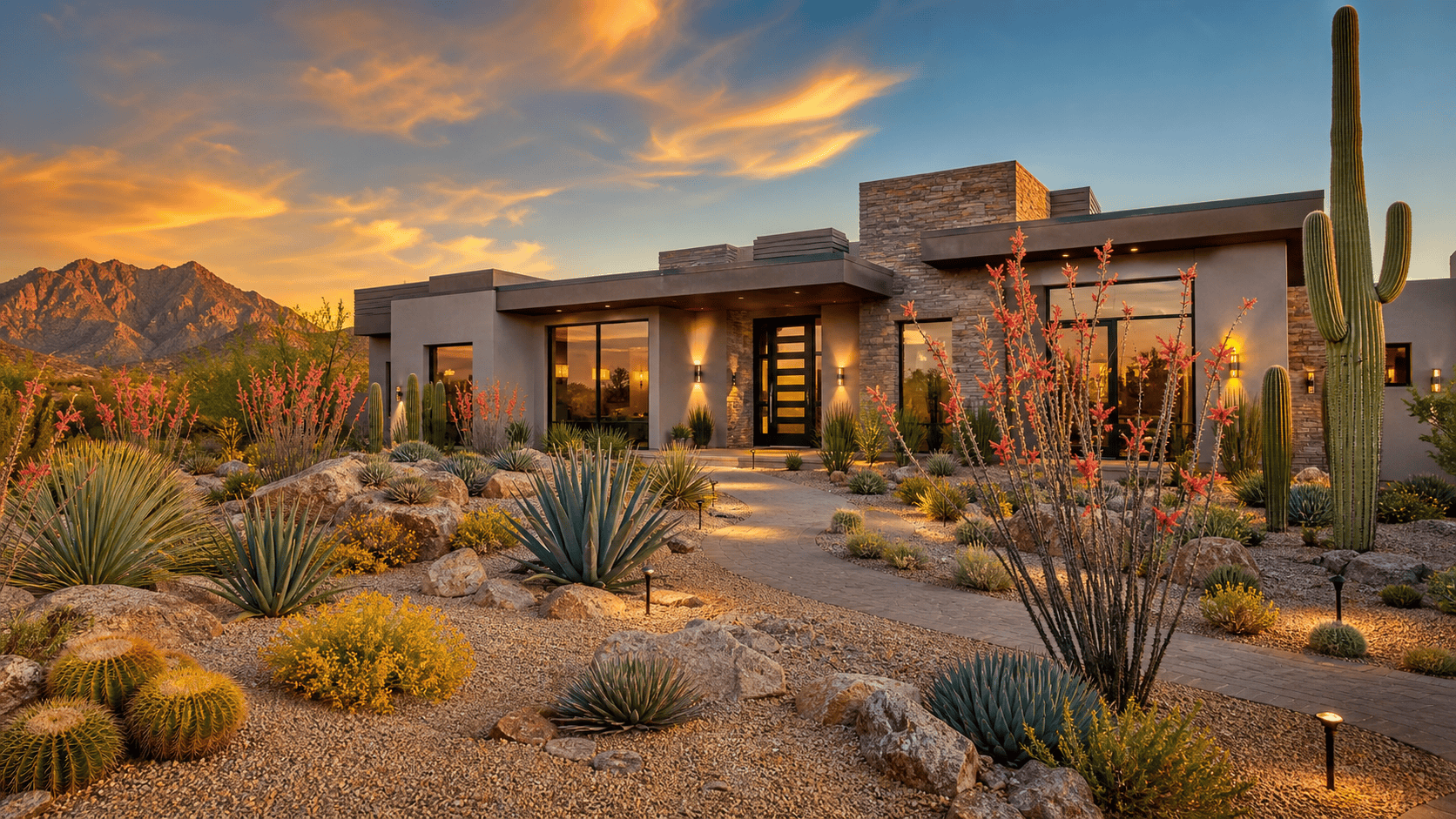
If you’re a homeowner, factor this into your budget. If you’re a buyer, ask about the water bill history on any home you’re considering. And if you’re planning outdoor landscaping, desert-adapted designs aren’t just a style choice anymore. They’re a financial one.
What This Means for Scottsdale Real Estate
Here’s the question I’m getting from clients: “Should I be worried about my home’s value because of water?”
My honest answer: not if you’re in the right position. Scottsdale is far better prepared than most Valley cities. The city has invested millions in infrastructure, has a diverse water portfolio strategy in the works, and has been planning for this for years. Cities that haven’t planned. That’s where the real risk is.
But awareness matters. Buyers are starting to ask about water. It’s showing up in conversations more than it ever has. And that trend is only going to grow, especially as national news keeps covering the Colorado River.
For sellers, this is actually an opportunity. If your home has water-smart landscaping, low-flow fixtures, or a smaller lot that uses less water, that’s a selling point worth highlighting. I’ve seen buyers respond to that kind of thing more and more this year.
For buyers, don’t let the headlines scare you away from Scottsdale. The city has a plan, and the lifestyle here — the golf, the dining, the mountain views, the outdoor living — isn’t going anywhere. But do your homework. Understand the water situation. Ask about rates. And work with an agent who can give you the full picture, not just the listing photos.
Christina’s Take
I’ve lived in Arizona long enough to know that water conversations come and go. But this one feels different. The stakes are real, the timelines are short, and the costs are tangible. What gives me confidence is that Scottsdale isn’t burying its head in the sand. The city is actively pursuing solutions, and the community is paying attention.
What I tell my clients is this: water doesn’t change the fact that Scottsdale is one of the most desirable places to live in the country. It does mean that smart buyers and sellers will factor it into their decisions and the ones who do will come out ahead.
The Bottom Line
Scottsdale’s water future is evolving, but the city is taking real steps to secure its supply. Whether you’re buying, selling, or staying put, understanding the water story gives you an edge in this market.
Ready to make your move? I’d love to help. Call or text me at 719.650.5174 or visit christinasellsaz.com to get started.